All your Search End Here: Featured
Showing posts with label Featured. Show all posts

Tuesday, 15 November 2011

Safe Ways to Save Money on Sunscreen

If you've heard that you can save money on sunscreen -- cheap is chic these days -- by using a body lotion with SPF 15, we've got some bargains that give your skin more burn, wrinkle, and cancer protection. First, think generic. Unless you have supersensitive skin or you're buying sunscreen for a baby, drugstores have plenty of good generic SPF 30s (the minimum you should use). Most generics now offer solid UVA/UVB protection, just like boutique-priced designer brands. Next, check your health plan: Some flexible spending accounts cover sunscreens of SPF 30 or more.
We like formulas that use physical sunscreens, like nanoparticled zinc oxide. Why? Not only does zinc work instantly and stay put well, but also, unlike chemical sunscreens, it isn't absorbed -- there's been some recent safety concern about absorbable chemical sunscreens. Until the research is clear, we're sticking with zinc.
Alternatively, if you hate sunscreen more than mosquitoes detest DEET, invest in some UV-protective clothing for the beach. Because summer's half over, you'll find sales. Now, be smart about buying and wearing it:
  • Look for the UPF (Ultraviolet Protection Factor) number. A top-of-the-line UPF 40–50 label means only about 2% of the sun's rays will get through.
  • Choose a loose, comfy fit. Tight UPF clothes deliver less protection than their number promises.
  • Don't swim in it. Wet clothes won't protect you, regardless of the UPF number.
That should keep your skin, wallet, and dermatologist happy this summer, and next.

Daily Health Tips

Saturday, 29 October 2011

Haunted Mumbai


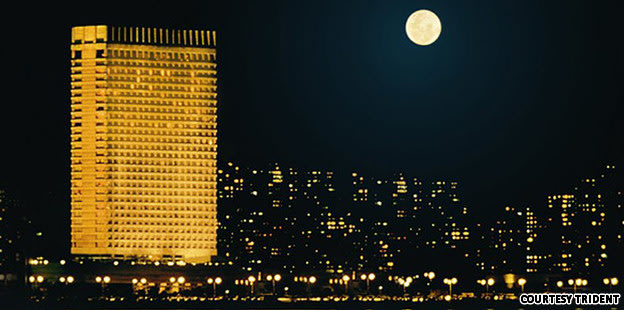
You can’t get to the 13th floor of the Trident Hotel at Nariman Point because there isn’t one. In fact, it is not uncommon for skyscrapers in Mumbai’s commercial district -- like Hoechst, Maker Chambers and Atlanta -- to exclude 13 when numbering their floors.

However, urban legends and local superstitions in haunted Mumbai go beyond mere triskaidekaphobia.

Stories of ghosts, unexplained serial suicides, abandoned mills, haunted houses and territorial widows in white saris determined to make people’s lives miserable from the afterlife, populate a large unofficial body of local folklore.

Despite the catalog of gruesome urban legends, Mumbai is a city with its head on its shoulders; a city with too much grit to capitulate to ghost stories.
No one will ever stop driving down the winding road from the Tower of Silence that offers one of the best views of the city; and the price of an apartment at Grand Paradi will surely frighten a Mumbaiker before any old story about spiteful spirits.
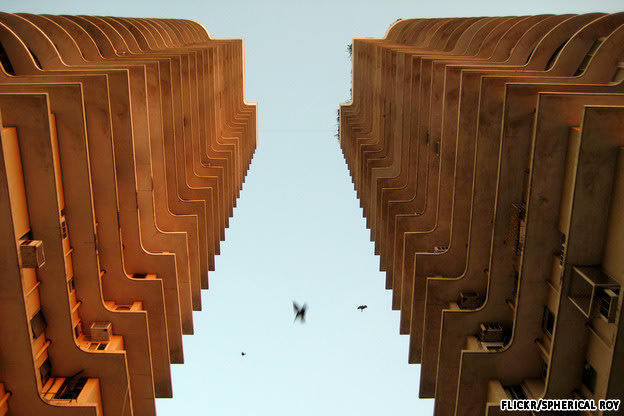
A spate of suicides here makes the luxurious Grand Paradi apartments one of Mumbai most notorious residential  …


1. Grand Paradi Towers

Arguably the most famous haunted Mumbai house is situated in one of the city’s most affluent areas.

On the eighth floor of the Grand Paradi Towers in Kemps Corner, a series of freakish suicides drew attention to what appeared to be a gruesome pattern of deaths and accidents in the building.

In 2004 an elderly couple jumped out of the window of this apartment. Their children and their grandchild followed suit within the year.

“There was something unacceptable to our rational minds that a whole family, three generations, living in one house should commit suicide in the same way," says a resident who has lived in the building for 30 years. "There have been up to 20 fatal accidents and suicides since the building was constructed in 1976. Many involving children and even a maid who either jumped or fell out of a window."

After the series of unfortunate events the building society began to believe that paranormal forces were at work.
“After the suicides of the family the building society decided to do a puja and a havan (prayer ceremonies) and since then everything has stopped but the flat remains unoccupied," another resident tell us.
You think this gate could keep the phantom hitchhiker out?


2. Sanjay Gandhi National Park

Located on the northern fringes of Mumbai, this large protected area is usually where visitors go in search of wildlife.

There are rumors however, that at night people see a phantom hitchhiker.
Dubious as this sounds, forest guards insist it's true.
For nearly 30 years the derelict Mukesh Mills was used by film and television crews. It's now making way for a …


3. Mukesh Mills
Shut down in 1980, this enormous abandoned mill in Colaba has been the shooting ground for numerous Bollywood films and advertisements.

Deserted and rundown, Mukesh Mills is a ready-made set for horror films and Gothic shows, especially considering the mills are actually considered to be haunted.

Many directors, actors and producers refuse to work here past sunset.

One television actress claimed to have had a particularly bad experience when one of her female co-stars suddenly began speaking in a manly voice, as if she were possessed, telling the crew to leave the premises immediately.

Others say this haunted Mumbai area is jinxed and people are always losing their belongings, wallets and phones.
Mukesh Mills will soon be demolished and replaced by a new high-rise residential and commercial complex and a five-star hotel.
The Tower of Silence, a Parsi temple near Bombay, circa 1955.


4. Tower of Silence

Sounds ominous doesn’t it? The Tower of Silence is actually a Parsi cemetery situated rather picturesquely on Malabar Hill in South Mumbai.

Custom dictates that Parsis leave the bodies of their dead for vultures to feed on.

The graphic images that come to mind lend themselves to all sorts of horrifying stories.

The winding road that leads down the hill is particularly desolate and eerie at night and the place has become recognized as a kind of ghoulish hangout.
The weird happenings at the Grand Paradi Towers for instance, were blamed on spectral forces emanating from this cemetery.

Sunday, 23 October 2011

Pictures From Space

Thursday, 20 October 2011

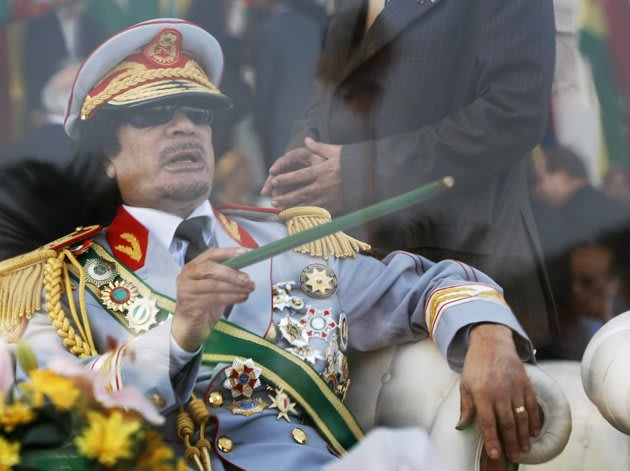
Libya's Gaddafi caught hiding like a "rat"

Click image to see more of dictator Moammar Gadhafi

Muammar Gaddafi called the rebels who rose up against his 42-years of one-man rule "rats," but in the end it was he who was captured cowering in a drainage pipe full of rubbish and filth.
"He called us rats, but look where we found him," said Ahmed Al Sahati, a 27-year-old government fighter, standing next to two stinking drainage pipes under a six-lane highway.
Government fighters, video evidence and the scenes of sheer carnage nearby told the story of the dictator's final hours.
Shortly before dawn prayers on Thursday, Gaddafi surrounded by a few dozen loyal bodyguards and accompanied by the head of his now non-existent army Abu Bakr Younis Jabr broke out of the two-month siege of Sirte and made a break for the west.
But they did not get far.
NATO said its aircraft struck military vehicles belonging to pro-Gaddafi forces near Sirte at about 8:30 a.m. (0630 GMT) on Thursday, but the alliance said it was unsure whether the strikes had killed Gaddafi.
Fifteen pick-up trucks mounted with heavy machine guns lay burned out, smashed and smoldering next to an electricity sub station some 20 meters from the main road, about two miles west of Sirte.
They had clearly been hit by a force far beyond anything the motley army the former rebels have assembled during eight months of revolt to overthrow the once feared leader.
But there was no bomb crater, indicating the strike may have been carried out by a helicopter gunship, or had been strafed by a fighter jet.
Inside the trucks still in their seats sat the charred skeletal remains of drivers and passengers killed instantly by the strike. Other bodies lay mutilated and contorted strewn in the grass. Some 50 bodies in all.
Gaddafi himself and a handful of his men escaped death and appeared to have ran through a stand of trees toward the main road and hid in the two drainage pipes.
But a group of government fighters were on their tail.
"At first we fired at them with anti-aircraft guns, but it was no use," said Salem Bakeer, while being feted by his comrades near the road. "Then we went in on foot.
"One of Gaddafi's men came out waving his rifle in the air and shouting surrender, but as soon as he saw my face he started shooting at me," he told Reuters.
"Then I think Gaddafi must have told them to stop. 'My master is here, my master is here', he said, 'Muammar Gaddafi is here and he is wounded'," said Bakeer.
"We went in and brought Gaddafi out. He was saying 'what's wrong? What's wrong? What's going on?'. Then we took him and put him in the car," Bakeer said.
At the time of capture, Gaddafi was already wounded with gunshots to his leg and to his back, Bakeer said.
Other government fighters who said they took part in Gaddafi's capture, separately confirmed Bakeer's version of events, though one said the man who ruled Libya for 42 years was shot and wounded at the last minute by one of his own men.
"One of Muammar Gaddafi's guards shot him in the chest," said Omran Jouma Shawan.
Army chief Jabr was also captured alive, Bakeer said. NTC officials later announced he was dead.
Fallen electricity cables partially covered the entrance to the pipes and the bodies of three men, apparently Gaddafi bodyguards lay at the entrance to one end, one in shorts probably due to a bandaged wound on his leg.
Four more bodies lay at the other end of the pipes. All black men, one had his brains blown out, another man had been decapitated, his dreadlocked head lying beside his torso.
Joyous government fighters fired their weapons in the air, shouted "Allahu Akbar" and posed for pictures. Others wrote graffiti on the concrete parapets of the highway.
"Gaddafi was captured here," said one simply.
From there Gaddafi was taken to the nearby city of Sirte where he and his dwindling band of die-hard supporters had made a last stand under a rain of missile and artillery fire in a desperate two-month siege.
Video footage showed Gaddafi, dazed and wounded, but still clearly alive and gesturing with his hands as he was dragged from a pick-up truck by a crowd of angry jostling group of government soldiers who hit him and pulled his hair.
He then appeared to fall to the ground and was enveloped by the crowd. NTC officials later announced Gaddafi had died of his wounds after capture.

Saturday, 15 October 2011

Wives keep Karva Chauth fast, luxuriously, for husbands

On Saturday, Kanika Syal will wake up before dawn to begin a fast at sunrise, and not eat or drink until she sees the moon at night -- all in the hope her husband will have a long life.
Karva Chauth is a centuries-old tradition observed annually in north India, where women dress up and fast for the day to pray for their spouse's good health and success.
"Since a very long time ago, we have been looking at our mothers celebrate," says the 25-year-old Syal, who is making her Karva Chauth debut as a newlywed. "It is our turn now."
But it's different for the teacher-turned-homemaker, who, as a member of India's rapidly growing middle class, will be doing a lot more than her mother ever did for the festival.
While it is customary for women to apply henna on their hands, buy clothes and expect gifts from relatives, the new generation of fast-keepers, with money to spare, is exploring a range of pampering options. They are spoilt for choice.
Syal will indulge in a 5,000 rupee ($102) diamond facial and body spa treatment to make sure she looks her best.
Also on the must-have list for the urban elite are botox, laser-hair reduction and chemical peel treatments at spas and beauty parlours offering Karva Chauth packages.
"There is a 30 to 40 percent increase in the number of patients who look for cosmetic procedures around this time," says Amit Bangia, head of the department of dermatology at the Asian Institute of Medical Sciences.
The origins of the festival are shrouded in mystery, but one tale tells of a queen being duped by her brothers into breaking her fast before moonrise, leading to the king's immediate death. She is given a second chance, fasts faithfully -- and he returns to life.
SWAROVSKI SIEVES
A booming economy and wave of consumerism have given India's middle-class more spending power, and malls and luxury stores are wooing women with items such as Swarovski crystal-studded channis, the sieve traditionally used to look at the moon before breaking the day's fast.
For the tech-savvy, jewellery firm Tanishq has introduced a Karva Chauth smartphone app to complement its festival line-up. The app converts the phone into a sieve for the night.
Even mehendi-wallas, the artists who apply henna, make a killing with their custom-made designs. Some charge 5,100 rupees to do both hands.
But not everyone indulges.
Shalini Sood Bhaduri, a former marketing professional, finds the festival "absolutely ridiculous" and "off-putting".
"I really don't believe that by observing the fast for one day, it is going to add to his life," she said.
Some feminists, however, believe it may be too simplistic to dismiss Karva Chauth as a patriarchal custom.
Madhu Kishwar, a senior fellow at the Centre for the Study of Developing Societies in Delhi, sees it as an interesting "game-play between men and women".
"There are so many rituals that women seem to have devised to raise the testosterone level of men ... that is when men are more likely to be indulgent partners," she said.
Bollywood hits such as "Dilwale Dulhania Le Jayenge", starring Shah Rukh Khan, have also made the festival more even-handed, with the hero fasting for his beloved.
Rohan Vasudeva, a Delhi-based businessman, observed the fast for his fiancée last year when they were engaged.
This time, Vasudeva will leave the fasting to his wife. But he is still counting down to Saturday.
"I am looking forward to taking her out to dinner."

Tuesday, 11 October 2011

Why there is no Indian Steve Jobs


VIRTUALLY every Saturday, Ajai Chowdhry, chairman and CEO of HCL Infosystems and one of the six co-founders of India's oldest computer company, HCL, spends a few hours listening to wannabe entrepreneurs. He listens to their ideas, looks at their business models and considers their pitches. Every once in a while, if he comes across an idea that interests or excites him, he goes a step further. He, and a few other senior executives like him, then ensure that that particular wannabe entrepreneur can manage to make the transition to actual entrepreneur.
They help out with critical start-up funding. But much more than money, they offer what these entrepreneurs really need and what they cannot find in any business school or bank. They offer mentoring and advice and the wisdom learnt through their experience of having walked this path earlier, on their own.
History
It's hard work, and consumes a lot of what every busy chief executive like Chowdhry is most short of — time. But he, and the dozens of other successful businessmen who form the Indian Angel Network, know that this is the critical difference between a dream staying on paper and the dream turning into reality.
Ajai Chowdhry should know that better than most. In 1976, his colleague in the Delhi Cloth Mills ( DCM), Shiv Nadar, had talked him, and four other colleagues and friends, into quitting DCM and starting their own computer company. Hindustan Computers Limited, as it was then known, managed to ship its first home designed, home- built microcomputer in 1978. Around the same time that a Syrian-American college drop-out called Steve Jobs had shipped his first microcomputer — the Macintosh.
This was the predecessor of the PC. But IBM was to lay claim to that term, and make it its own, a full three years later, when it managed to roll out its first desktop PC. IBM, of course, took a different route to becoming the world's largest technology company. And Jobs took Apple on a different journey altogether, making it arguably the world's most inventive technology company, and eventually the world's most valuable one. Period.
But what of HCL? Just imagine. Thirty six years ago, all three companies were virtually at the same point in the industry's lifecycle. Apple and HCL, in fact, were so similar, they could have been twins. Jobs started Apple in a garage.
Nadar, Chowdhry and their friends started their company in a south Delhi ' barsati'. Apple took an off- the- shelf microprocessor and built a computer around it. And then developed the software to make it run. HCL took an off- the- shelf microprocessor and built a computer around it. And then wrote the software to make it run. At virtually the same time.
Nearly four decades later, the picture has changed dramatically. Today, HCL is admittedly a very successful company. It has revenues in excess of $ 6 billion and is among the top five players in the country in all the sectors that it operates in.
Difference
But look at Apple. Apple recorded net sales ( in 2010) of over $ 65 billion. In the stock market, at $ 350 billion, Apple is nearly a hundred times more valuable than HCL. It is not just the top player in its segments in the US — it is the top player in the world.
What happened? Why did HCL get left behind, while Apple managed to surge ahead unstoppably? What was the ' X' factor which powered Apple to such heights? Apple fans would unhesitatingly say: Steve Jobs. Yes, the man was a genius.
True, he had the uncanny ability to visualise not just what the consumer would want, but what the consumer would lust after, what the consumer would lose sleep over and what the consumer would be willing to queue up for hours and days in sun and rain to buy. There has never been an entrepreneur quite like him. Arguably, there never might be an entrepreneur quite like him again.
But if Apple and Jobs were in a special league, it does not mean that HCL was not something special too. It too was a powerhouse of invention. Not only did HCL develop a microcomputer at the same time as Apple or a desktop PC three years ahead of IBM. They continued to invent. HCL developed a working UNIX computer years ahead of Sun and its own relational database management system ( RDBMS) ahead of Oracle. In 1981, HCL's Shiv Nadar funded two college dorm- mates who started a fledgling information technology training company called NIIT. Nevertheless, there was one key element which was different, the reason why Apple and Sun and IBM and Oracle became the kind of global giants that they are and the reason why HCL's growth was stunted.
The difference was that HCL was an Indian company, working in Indian conditions.
The others were all American. And the ecosystem available to HCL and its American counterparts was incomparably different.
The very factor which helped create HCL may have helped to choke it, and companies like it. In 1977, George Fernandes' quirky nationalism drove IBM out of India, opening the doors for HCL. But over the next 13 years — the unlucky 13 perhaps — before reforms started, government regulations and the licence permit Raj ensured that HCL was left comprehensively behind. It could not make enough computers to meet demand, because it didn't have the licence to produce the extra number.
When it got the licence, it could not import the components needed, because foreign exchange was short and you needed a separate permit for precious foreign exchange. It could not move into other markets abroad because that was controlled too. And so on.
HCL can justifiably blame the lack of reforms for its lack of growth. But for hundreds of thousands of would- be inventors and entrepreneurs, there are still as many and equally insuperable hurdles, in their way. From a Kerala inventor reduced to sending emails to journalists about his heat exchanger which does the work of an AC at a hundredth the cost, to the son of a Gujarat potter whose ' rural fridge' wins him global awards and recognition, but no help in product ionising it, the lack of an ecosystem which encourages and supports innovation and enterprise is killing off the vision of thousands of Indian Steve Jobs before they can be turned to reality.
Lesson
That is the real lesson we can learn from looking at the life of Steve Jobs. Jobs was what he was because he was Steve Jobs — a genius. But Apple became Apple because it managed to find an environment where the company could convert its ideas into reality and reap adequate reward for its inventiveness.
What if Jobs had decided to stay on in India after his 1974 visit? What if he had started Apple in India, not the US? Could a college drop- out have managed to get the funding to start a company? Would anybody have taken the technology developed by a non- graduate seriously? The answer is obvious. It is not just enough to be inventive or even entrepreneurial.
Without a viable ecosystem which encourages new ideas, is genuinely open to competition and one which rewards intellectual innovation adequately, we would never be able to boast about our own Apples or our own Steves.
But two decades down the reforms road, we are still to learn that lesson.

Thursday, 6 October 2011

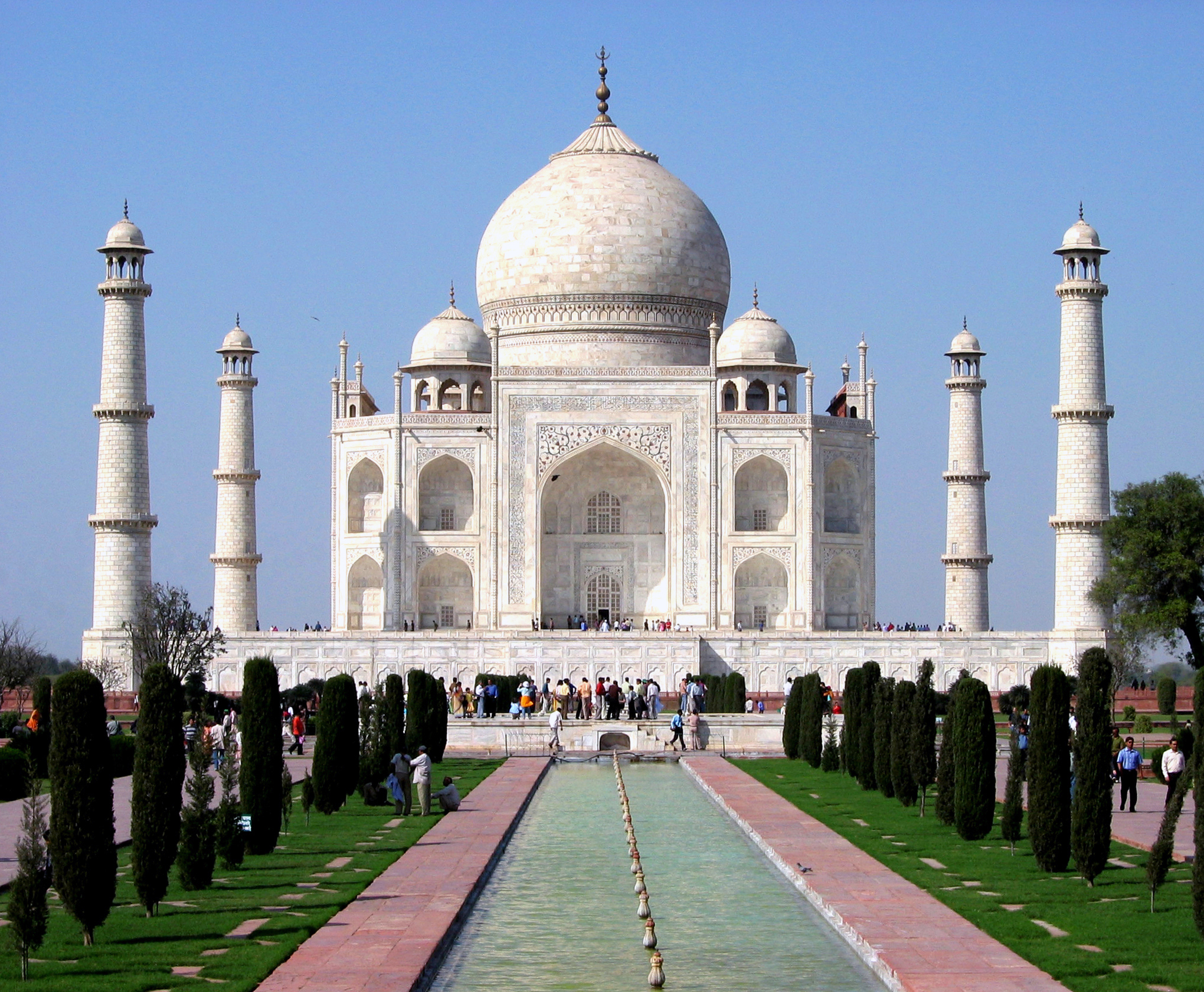
358-yr-old Taj Mahal 'in danger of collapsing within 5 years'


The Taj Mahal will collapse within five years unless urgent action is taken to fix its rotting foundations, campaigners warn.

The 358-year-old marble mausoleum is India's most famous tourist attraction, bringing four million visitors a year to the northern city of Agra.

But the river crucial to its survival is being blighted by pollution, industry and deforestation.

Campaigners believe the foundations have become brittle and are disintegrating.

Cracks appeared last year in parts of the tomb, and the four minarets, which surround the monument, are showing signs of tilting.

The Taj Mahal was built by Mogul emperor Shah Jahan, who was grief-stricken by the death of his wife Mumtaz Mahal in childbirth.

A campaign group of historians, environmentalists and politicians say time is running out to prevent a 'looming crisis'.

"If the crisis is not tackled on a war-footing, the Taj Mahal will cave in between two and five years," the Daily Mail quoted Ramshankar Katheria, the MP for Agra who is leading the campaign, as saying.

"The architectural wonder of the world is losing its shine, and if this persists the minarets may also collapse since the wooden foundation - beneath the wells - is rotting due to lack of water.

"No one has been allowed to go into the foundations for the last three decades. If everything is fine, what have they got to hide?"

Professor Ram Nath, a historian who is one of the world's leading authorities on the Taj, said: "The Taj stands just on the edge of the river Yamuna which has now dried up.

"This was never anticipated by its builders. The river is a constituent of its architectural design and if the river dies, the Taj cannot survive."

Monday, 3 October 2011

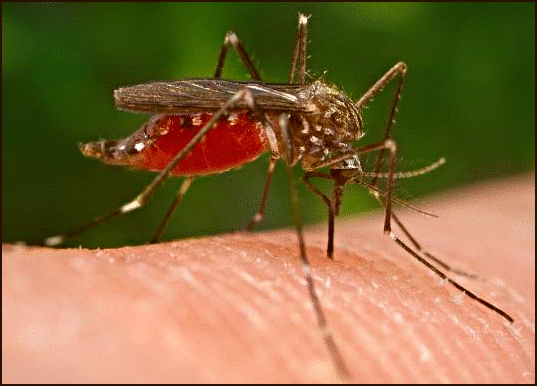
Mosquitoes home in on human body odour

Washington, Oct 2 : Female mosquitoes target humans by cueing in on the carbon dioxide (CO2) and body odour they release, causing malaria, dengue and yellow fever.

Experiments conducted by two entomologists from the University of California, Riverside have shown how female Aedes aegypti -- that transmit yellow fever and dengue -- respond to plumes of CO2 and human odour.

They reported that puffs of exhaled CO2 first attract these mosquitoes, which then proceed to follow a broad skin odour plume, eventually landing on a human host, the Journal of Experimental Biology reports.

These findings by Ring Carde, professor of entomology at California, Riverside, and Teun Dekker, formerly a graduate student in Carde's lab, could clue scientists on how odours can be used to trap such mosquitoes, according to a university statement.

Yellow fever is a viral disease that kills 30,000 people worldwide each year. Dengue, another viral disease, infects 50 to 100 million people worldwide a year, leading to half a million hospitalisations and 1.25 million deaths.

'The mosquitoes' carbon dioxide receptors allow the insects to respond almost instantly to even the slightest amount of the gas,' Carde said.

'Carbon dioxide alone attracts these mosquitoes and does not require assistance from other odours. Skin odours, however, become important when the mosquito is near the host, selecting biting sites.

'Further, the mosquitoes' sensitivity to skin odours increases five- to 25-fold after 'priming' with a whiff of carbon dioxide.'

Share

Twitter Delicious Facebook Digg Stumbleupon Favorites More