All your Search End Here: News From Other Region
Showing posts with label News From Other Region. Show all posts

Saturday, 12 November 2011

Huge blast kills 17 at Iran military base

TEHRAN (Reuters) - A massive explosion at a military arms depot near the Iranian capital Tehran on Saturday killed 17 Revolutionary Guards and wounded 15, a spokesman for the elite fighting force told the semi-official Fars news agency.
Officials said the blast was an accident which happened as troops were moving munitions at a base in Bidganeh, near the town of Shahriar, some 45 km (28 miles) west of Tehran.
The explosion shook homes and rattled windows for miles around, at a time of mounting tension with Israel over Iran's nuclear program.
"Today at 13:30, (0900 GMT), an explosion happened in one of the Revolutionary Guards' bases while a consignment of explosive devices was being moved out from the arsenal, besides that some munitions in the arsenal exploded which created a terrifying sound," Revolutionary Guards spokesman Ramezan Sharif told state
TV.
Sharif initially said 27 people had been killed but later revised that figure down to 17.
Residents in western suburbs of Tehran told Reuters they had felt the blast, some assuming it to be a moderate earthquake.
The explosion started a fire at the base which raged for hours. Surrounding streets were closed and reporters were kept away from the scene.
RISK
Some media reported there had been two explosions and the head of Iran's Red Crescent organization said there was a risk of further blasts.
Mahmoud Mozafar told the Mehr news agency that only six paramedics had been allowed into the Amir Al-Momenin military base and that thick smoke was hampering the rescue operation.
There were no reports linking the blast to any air strike or other attack. Tension has risen in recent weeks between Iran and its enemies Israel and the United States, which have not ruled out attacking facilities whose occupants they believe are working toward making nuclear weapons.
Sharif denied what he said was speculation in the Western media that the military base was linked to Iran's nuclear program.
"This blast is not related to any nuclear tests that some foreign media have reported," he told Mehr.
Tehran denies Western accusations, that were given some credence by a report from the UN nuclear agency this week, that its nuclear program has military ends.
On October 12 last year a similar blast at a Revolutionary Guards munitions store killed and wounded several servicemen in Khoramabad, western Iran. Authorities said that explosion was an accident too.

Tuesday, 8 November 2011

Italian parliament to vote on budget reform


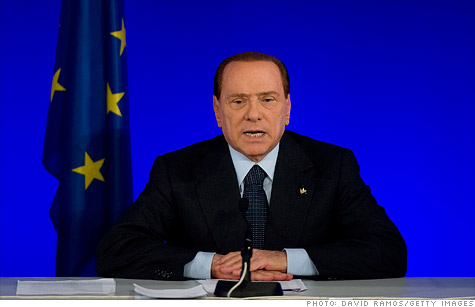
 The Italian parliament gets ready to vote on budget reform as Prime Minister Silvio Berlusconi calls rumors of his resignation 'groundless.'


ATLANTA (CNN Wire) -- The Italian parliament is expected to face a crucial vote on budget reform measures Tuesday as the country's president warned of a credibility gap if it failed to make such changes.
Last month, Italy agreed to implement structural reforms during an European Union meeting in Brussels. Italian President Giorgio Napolitano said the reforms must be put in place.
Debate is scheduled to start just after midday.
The developments came as Prime Minister Silvio Berlusconi denied Monday's rumors that he might resign, highlighting Europe's growing unease in Italy's economy.
"The rumors of my resignation are groundless," a message on his official Facebook page said.
A press aide to Berlusconi also told CNN he had no plans to resign.
But there are growing fears that Berlusconi's government no longer has the strength to push through the austerity measures needed to get the economy back on track.
These include tax increases and raising the retirement age by two years to 67.
A vote to pass the reform measures could give the embattled government enough fortitude to keep the prime minister in power.
Although Italy passed a package of austerity measures in September, including tax increases, some economists fear that without further reforms its debts could become overwhelming -- and there would not be enough money in the European rescue fund to bail it out.
Italy has one of the largest bond markets in the world, worth an estimated €2 trillion (about $2.8 trillion).


Friday, 4 November 2011

Pirates seize tanker off coast of Nigeria

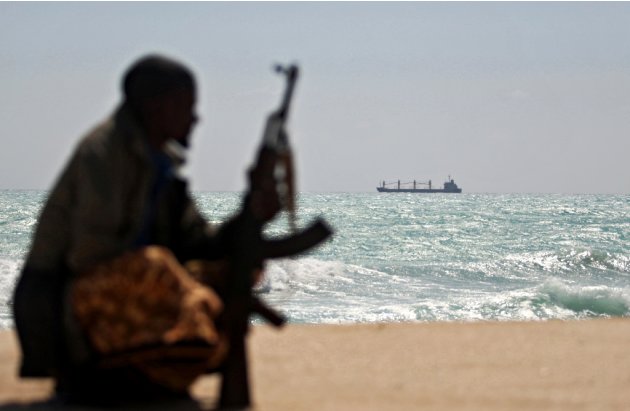
 An armed pirate is pictured on the shores of Hobyo town, in northeastern Somalia, in 2010


Pirates seized an oil tanker with over 20 crew off the coast of Nigeria, an official of the International Maritime Bureau said on Thursday amid mounting concern at such attacks in West Africa.
"We believe it's been hijacked and we believe there are about 25 crew on board," Cyrus Mody, a London-based manager with the world's piracy watchdog told AFP on the phone.
The attack occurred on October 30, he said.
A Nigerian vessel servicing an international oil firm was also attacked on on the country's waters off the Niger Delta region on Wednesday and its whereabouts were unclear on Thursday, a security source told AFP in the oil city of Port Harcourt.
Neither the nationalities of the crew on the tanker nor details of the vessel could be immediately confirmed. A Nigerian navy official was unable to confirm the incident.
The attacks are the latest in a surge of attacks along the Gulf of Guinea in recent months.
Twenty Eastern European crew hijacked off Nigeria last month were freed along with their vessel around a week later.
The coast of Nigeria, Africa's largest oil producer, has long been a dangerous place to sail, and the risk has extended in recent months to the coast of the small neighbouring nation of Benin.
Benin's coast has seen at least 20 piracy incidents this year compared to none in 2010. The two neighbours - Nigeria and Benin - in September launched joint sea patrols to tackle the piracy surge.
The maritime bureau has warned that the spate of attacks off West Africa indicates the region could emerge as a new piracy "hotspot".
Unlike the explosion of piracy off the coast of Somalia on the eastern side of the continent in recent years, those involved in the recent west African attacks have so far not appeared to be after ransom payments.
Fuel or oil cargo has been stolen for sale on the region's lucrative black market, while robberies have also occurred. Crew members have been beaten and the pirates tend to be heavily armed.
The theft of such cargo tends to be relatively sophisticated, with tankers often being directed to another pirate-controlled ship, where the fuel is siphoned and then taken elsewhere for sale.
Benin, Togo and Ghana will hold a meeting in Cotonou next week to hammer out ways to end piracy in the Gulf of Guinea.

Sunday, 30 October 2011

3 Australian soldiers killed in Afghanistan

SYDNEY — Three Australian soldiers and an Afghan interpreter were killed and seven other soldiers were wounded when a man wearing an Afghan army uniform opened fire during a parade at a patrol base in Afghanistan, officials said Sunday.
The gunman in Saturday's attack was shot dead by Australian soldiers at the base in southern Kandahar province, Australian Defense Force chief Lt. Gen. David Hurley told reporters in the western Australian city of Perth. Of the seven wounded Australian soldiers, one was being treated for life-threatening injuries and four others for serious injuries, Hurley said.
"Given the nature of this attack, there will be a natural response to question our role in mentoring the Afghan national army," Hurley said. "However, we must be careful not to jump to conclusions. An extensive investigation is commencing so that we can develop an accurate understanding of the circumstances of this incident."
Hurley said the gunman's motive was not yet known. Afghan soldiers at the base were disarmed and confined to their barracks as a precaution as officials investigated the shooting.
Australia has 1,550 troops in Afghanistan, the largest force provided by any country outside NATO. Saturday's attacks brought the Australian death toll from the conflict to 32.
The shooting came the same day a Taliban suicide bomber rammed an explosives-laden vehicle into an armored NATO bus in Kabul, killing 17 people
"Whether the two are related, time will tell," Australian Defense Minister Stephen Smith said. "There's nothing obvious that would draw that conclusion."
Smith insisted that Australia's role in Afghanistan remained vital and said Afghanistan was still on track to take over its own security by 2014 — the year Australia plans to withdraw its troops from the country.
"If we were to leave now, the Afghanistan-Pakistan border area would again become a breeding ground for international terrorism," he said.
Australian Prime Minister Julia Gillard said the shooting marked a dark day for the nation.
"I don't know a better word than the word 'bitter' to describe how we feel today," Gillard told reporters in Perth. "I recognize the circumstances of this incident are going to raise many deep and troubling questions in the minds of Australians. Attacks like this are designed to do just that — to corrode trust."
Gillard repeated Smith's assertion that the incident would not change Australia's mission in Afghanistan.
"Our partners in the Afghan national army are shocked and horrified by what has occurred. The people of Afghanistan are trying to build a nation — a nation free of violence and free of fear," Gillard said. "We know that the act of this Afghanistan (army) member was not in the interests of the people of Afghanistan."

Saturday, 22 October 2011

Shark kills American diver off western Australia

CANBERRA, Australia - A Great White Shark killed an American recreational diver on Saturday in a third fatality in recent weeks off southwest Australia that has shaken beach-loving residents and sparked fears of a rogue predator targeting humans.
Australia averages fewer than two fatal shark attacks a year nationwide.
The state government has promised to hunt the killer and is considering more aircraft surveillance off west coast beaches as whales migrating in larger numbers attract more sharks.
The first sign that the 32-year-old American man, whose name and hometown have not been released, was in trouble as he dived alone was when a stream of bubbles erupted on the ocean surface beside his 25-foot (8-meter) dive boat, police said.
His two horrified companions on the boat saw his lifeless body surface and a 10-foot (3-meter) great white swim away, Western Australia Police Sgt. Gerry Cassidy said.
The American had a work visa and had been living in a Perth beachside suburb for several months.
The shark struck 500 yards (meters) north of the picturesque tourist haven of Rottnest Island, which is 11 miles (18 kilometers) west of a popular Perth city mainland beach where a 64-year-old Australian swimmer is believed to have been taken by a great white on Oct. 10.
Authorities cannot say whether the American was killed by the same shark that is believed to have taken Bryn Martin as he made his regular morning swim from Perth's Cottesloe Beach toward a buoy about 380 yards (350 meters) offshore.
But an analysis of Martin's torn swimming trunks recovered from the seabed near the buoy pointed to a great white shark being the culprit. No other trace of Martin has been found.
"It's a cloudy old day today which is the same as we had the other day with Cottesloe, and they're the conditions that sharks love," Cassidy said.
The tragedies follow the death on Sept. 4 of 21-year-old bodyboarder Kyle Burden, whose legs were bitten off by a shark described as 15 feet (4.5 meters) long at a beach south of Perth. Witnesses were unsure of the type of shark.
Perth, the capital of Western Australia state and one of Australia's largest cities, is renowned for its white sand beaches, but the best surfing locations are further south in the wine region of Margaret River.
While great whites trail the migration of whales between Antarctic and northwest Australian waters, the west coast has not been widely regarded as a shark danger zone for humans.
Premier Colin Barnett, the leader of the state government, took charge of the official response on Saturday, telling reporters that the shark will be hunted and killed if possible.
He said fisheries officers will spread bait in the area of the attack to try to catch the shark.
While great whites are protected under Australian law, Barnett said his government would consider increasing the numbers of other sharks that commercial fishermen can catch, following reports that shark numbers have increased.
He said his government was also looking at increasing aerial shark patrols over popular beaches.
"I think all West Australians need to take special care in going to the beach and swimming, particularly if they go diving," he said.
Barnett said he did not expect the fatalities would damage the state's tourism reputation or diminish people's enjoyment of the beaches.


TRIPOLI, Libya - Libya's new leaders will declare liberation on Sunday, officials said, a move that will start the clock for elections after months of bloodshed that culminated in the death of longtime dictator Moammar Gadhafi. 

But the victory has been clouded by questions over how Gadhafi was killed after images emerged showing he was found alive and taunted and beaten by his captors.
The long-awaited declaration of liberation will come more than two months after revolutionary forces swept into Tripoli and seized control of most of the oil-rich North African nation. It was stalled by fierce resistance by Gadhafi loyalists in his hometown of Sirte, Bani Walid and pockets in the South.
Sirte was the last to fall, but Gadhafi's son and one-time heir apparent and many of his fighters have apparently escaped, raising fears they could continue to make trouble.
With Gadhafi gone, however, the governing National Transitional Council was moving forward with efforts to transform the country that was ruled by one man for more than four decades into a democracy.
NTC officials had said the announcement would be made Saturday in the eastern city of Benghazi, the revolution's birthplace. But spokesman Abdel-Rahman Busin said preparations were under way for a Sunday ceremony instead. He didn't give an explanation for the delay.
The transitional leadership has said it would declare a new interim government within a month of liberation and hold elections for a constitutional assembly within eight months, then to organize parliamentary and presidential vote within a year after that.
On Saturday, acting Prime Minister Mahmoud Jibril, who has said he plans to resign after liberation, said the interim government "should last until the first presidential elections."
Speaking at the World Economic Forum on the Jordanian shores of the Dead Sea, he also said the NTC must move quickly to disarm rebels who helped to overthrow Gadhafi's nearly 42-year-old regime. He said it was a priority to ensure huge caches of weapons are turned in over the "next few days."
Jibril also said the Libyan people must remember the agony of the past and choose a different path for the future. He said he was "relieved" after Gadhafi's ouster, describing it as a "great moment in my life."
Gadhafi's blood-streaked body has been put on display in a commercial freezer at a shopping center in Misrata as Libyan authorities argued about where to bury the remains. Fighters from Misrata — a city brutally besieged by Gadhafi's forces during the civil war — seemed to claim ownership of it, forcing the delay of a planned burial Friday.
Fathi Bashagha, a spokesman for the Misrata military council, said a decision will be made Saturday but he ruled out a full autopsy unless demanded by an international committee or the transitional government "and so far there have been no requests."
At least four groups of doctors have examined the body and determined the cause of death was a bullet to the head and stomach, Bashagha said. "As far as we are concerned in Misrata, doctors have checked him and determined how he died, so there is no need to cut his body up," he said.
The bloody siege of Misrata over the summer instilled a particularly virulent hatred of Gadhafi there — a hatred now mixed with pride because he was captured and killed by fighters from Libya's third-largest city, 125 miles (200 kilometers) southeast of Tripoli.
Residents crowded into long lines to get a chance to view the body of Gadhafi, which was laid out on a mattress on the floor of an emptied-out vegetable and onions freezer. The body had apparently been stowed in the freezer in an attempt to keep it out of the public eye, but once the location was known, that intention was swept away in the overwhelming desire of residents to see the man they so deeply despised.
Men, women and children filed in to take their picture with the body, with some chanting "We want to see the dog."
The site's guards had even organized separate visiting hours for families and single men.
Gadhafi's 69-year-old body was stripped to the waist, his torso and arms streaked with dried blood. Bullet wounds in the chest, abdomen and left side of the head were visible.
Gadhafi's family, most of whom are in Algeria or other nearby African nations, issued a statement Friday calling for an investigation into how Gadhafi and another of his sons, Muatassim, were killed. In the statement on the pro-Gadhafi, Syria-based TV station Al-Rai, they asked for international pressure on the NTC to hand over the bodies of the two men to their tribe.
Rupert Colville, a spokesman for the U.N. High Commissioner for Human Rights, said the images of his last moments were very disturbing.
"More details are needed to ascertain whether he was killed in some form of fighting or was executed after his capture," Colville said.

Monday, 17 October 2011

Philippine man kills wife, 3 children, police say

A Filipino man shot his wife, three of his children and their maid with a pistol while having breakfast Sunday in a central Philippine town and then killed himself, police said. But he spared his favorite daughter, they said.

The killings in Talisay town in Cebu province shocked many in the crime-weary country.

Emmanuel Ponce, a 55-year-old former seaman, shot his family in their affluent home, police said.

Ponce told his youngest daughter to leave and call police before shooting his son for the second time and then killing himself, police investigator Mike Espina said.

"You'll be the only one who will live," Espina said the father told his 14-year-old daughter. "After this, I'll commit suicide. Go and call the police."

As the daughter ran out of the house, she saw her father shoot her brother for the second time and later heard another shot, Espina said.

Espina said the motive for the killings was unclear and there was no sign Ponce was drunk. Ponce had retired after working for years as a seaman and his wife was a bank manager.

"This is a puzzle for us at the moment," Espina told The Associated Press by telephone from Talisay, about 350 miles (560 kilometers) southeast of Manila. He said the surviving daughter was still too much in shock to talk much about the shootings.

"She was asking how her parents and siblings were," Espina said. "I just told her vaguely that ambulance vans had come and they were all taken to a hospital."

Social Welfare Secretary Dinky Soliman said the daughter would be helped to overcome her trauma.

The ABS-CBN network reported that a relative said Ponce had received a head injury in an accident several years ago while working as a seaman but had recovered since then.

Sunday, 16 October 2011

Saudi Arabia takes Iran to U.N. over alleged plot - papers

Saudi Arabia has taken a first step to have Iran reported to the United Nations Security Council, a move that could lead to new sanctions, over an alleged plot to assassinate its ambassador in Washington, Saudi-owned newspapers reported on Sunday.

"Saudi Arabia's permanent mission to the United Nations... formally requested the United Nations Secretary General notify the Security Council of the heinous conspiracy," the Asharq al-Awsat newspaper reported, citing a statement from the kingdom's U.N. mission.

The U.S. on Tuesday said it had uncovered a plot by two men with links to Iran's security forces to assassinate Adel al-Jubeir by planting a bomb in a Washington restaurant.

One of the men, who had allegedly paid a U.S. undercover agent posing as a Mexican drug cartel hitman to carry out the assassination, has been arrested while the other is in Iran, the United States said.

Tehran has denied the charges.

The Saudi step follows remarks by U.S. President Barack Obama that he would press for "the toughest possible sanctions" against Iran over the alleged plot and vowed not to take any options off the table - a phrase commonly used to mean the possibility of using force.

Saudi Foreign Minister Prince Saud al-Faisal said on Wednesday in Vienna that Iran "was responsible" for the alleged plot and insisted the kingdom would adopt a "measured response".

Tensions between Shi'ite Muslim Iran and Sunni Saudi Arabia have risen in recent months as Arab uprisings have altered the balance of power in the Middle East.

Saudi Arabia earlier this month appeared to blame Iran, without naming it, for instigating clashes between members of the kingdom's Shi'ite minority and security forces on Oct 3 in which 14 people were injured.

Sunday, 9 October 2011

Harper vows to protect jobs, economy


The Canadian government will remain vigilant and active to protect jobs and the economy amid continued global economic uncertainty, Prime Minister Stephen Harper said on Friday.
Harper - who has indicated his Conservative government would start a second stimulus program if necessary - said Ottawa has a crucial role to play amid the economic woes.
"Our government will remain vigilant and active to protect Canadian jobs and the Canadian economy. We will keep taxes down," he told a televised event in Regina, Saskatchewan.

Libya forces tighten grip on Kadhafi hometown


Forces of Libya's new regime on Sunday tightened their stranglehold on Moamer Kadhafi's hometown Sirte, seizing its university and edging closer to his diehards holed up in a conference centre.
Fighting has been raging around Sirte's university and the nearby Ouagadougou conference centre since the National Transitional Council forces launched on Friday what they are calling their final assault on the coastal city.
"We have taken the university... we have liberated the area from Kadhafi's dogs," NTC commander Nasser Zamud said, as hundreds of his fighters roamed the campus.
"The fighting has been difficult; there were a lot of snipers," Zamud said of the assault on the university in the Mediterranean city's southeast.
On Sunday morning, the NTC combatants were finally able to enter the university and its new campus, a huge construction site where Kadhafi snipers had been picking them off from unfinished buildings.
But an AFP correspondent said fighting was still raging for the Ouagadougou conference centre, an enormous rectangular building and its concrete bunkers, a key base for the pro-Kadhafi forces.
The ferocity of the Kadhafi forces' resistance in Sirte and their other main bastion, Bani Walid, has surprised the new regime, with NTC chief Mustafa Abdel Jalil admitting the battle was "very vicious."
"Our fighters today still have to deal with snipers in high positions," he told a joint news conference in Tripoli late Saturday with visiting British Defence Secretary Liam Fox and Italian counterpart Ignazio La Russa.
Medics said six NTC fighters were killed and 99 wounded on Saturday, taking the toll to 23 dead and almost 330 wounded since they launched what they are calling their final assault on the Kadhafi bastion.
Thousands of civilians are still trapped in the former Libyan leader's birthplace, and NTC commanders said they were pacing their advance to evacuate some of those who had not fled and to avoid losses from friendly fire.
One resident, Nasser Hamid, who was fleeing with his wife, three children and niece, said his family managed sneak out in their loaded car under the cover of dark early on Sunday.
"Our flat was destroyed by machinegun fire. We stayed in the stairwell. The children were upset because their toys were destroyed," Hamid told AFP.
"We waited so long because the Kadhafi loyalists said if we left, they would never let us come back."
His wife Salima Ali Omar said however that the forces loyal to the old regime appeared to be fighting a losing battle.
"The (Kadhafi) volunteers say they are fed up, they don't want to fight any more. They are throwing their guns in the rubbish bins," she said.
Forces from Libya's interim regime scored another strategic goal on Saturday, seizing a four-lane avenue which opens the way to a final assault on a key base of Kadhafi's troops.
Attacking from the east, NTC fighters seized the road to the Ouagadougou conference centre after days of heavy pounding by NTC tank, cannon and rocket fire and ground assaults.
Naji Mismari, an NTC commander, said several Kadhafi loyalists were killed but without giving a number. "Their corpses are still in the houses," he said, adding that 17 trapped families were evacuated.
On the western front, fighting concentrated on the so-called 700-house complex where NTC forces fired RPGs and machineguns while Kadhafi loyalists used snipers and mortars.
"A sniper hit one of my men and the bullet went right through his head, killing him," said fighter Nabil Meftah.
The gains inside Sirte are seen as crucial by the NTC, which is awaiting the city's capture to declare the liberation of the whole of Libya, clearing the way to draw up a timetable for elections.
The council has ruled most of the oil-rich country since its forces overran Tripoli on August 23, forcing Kadhafi and his inner circle on the run.
NTC commanders believe that one of Kadhafi's sons, Mutassim, is holed up in Sirte and that another, Seif al-Islam, once seen as the former strongman's successor, is hiding in Bani Walid, possibly with his father.
New regime fighters have been stationed for weeks outside Bani Walid, a Saharan oasis 170 kilometres (100 miles) southeast of Tripoli, and the frustration is beginning to show.
"I want to fight but I am awaiting orders," said a young man at a mosque some 40 kilometres (25 miles) north of Bani Walid which serves as a base for the NTC forces.
Field commander Yusef al-Sharif insists that the campaign for Bani Walid is progressing.
"Kadhafi's men have left Bani Walid, they are fighting 10 kilometres (six miles) from the city centre," he said.
"We control 90 percent of the sector. We just have to push the pro-Kadhafi guys out of the outskirts and tackle the snipers."

Monday, 3 October 2011

Carlyle, Hellman & Friedman to take PPD private for $3.9 bln

Carlyle Group and Hellman & Friedman will buy contract research firm Pharmaceutical Product Development Inc in a $3.9 billion cash deal, the latest in a string of private equity takeovers in the healthcare industry.
The offer price of $33.25 per PPD share is nearly 30 percent higher than the stock's Friday close.
The deal follows on the heels of Apax Partners' $5 billion deal for Kinetic Concepts Inc, TPG Capital's $2 billion buy of diagnostics firm Immucor and KKR's $2.38 billion buyout of a Pfizer unit.
It would also mark the second deal in the contract research sector since May, when privately held global contract research organization INC Research bought Kendle International for $232 million.
PPD shares were trading up 26 percent at $32.25 in morning trade on Nasdaq, a dollar shy of the offer price, suggesting some investors have doubts about the transaction.
"The event-driven investors that remained in the stock as it weakened over the last couple of weeks are going ahead and selling their positions on the news, rather than wait for the final dollar," Jefferies analyst David Windley said.
"The price is satisfactory but it obviously was impacted by the challenging market conditions -- comes at the low end of the range that was discussed in the news earlier in the quarter."
Industry analysts were predicting an offer in the range of $35-$37 a share, after a media report in July first said the company was looking to sell itself.
Although PPD has 30 calendar days to solicit acquisition proposals from third parties, Windley does not expect a better offer for the company.
FOCUS ON CRO
Contract research organizations (CROs), which provide drug research services to the pharmaceutical and biotechnology industry, were hit hard during the credit crunch when drugmakers halted or shelved a lot of drug development to cut costs.
However, drugmakers are turning to new development with renewed vigour as they have exhausted all methods to streamline operations and the patent cliff on several blockbuster drugs looms. CROs should reap the benefits of any new development.
PPD shares, however, have lost 8 percent of their value since July, when its board had asked management to review its strategic plan. In August, sources told Reuters that Carlyle was in talks to buy the company.
The shares were trading at a multiple of 16 times forward earnings as of Friday, compared with a sector average of 30, according to Thomson Reuters data.
Bigger rival and industry bellwether Covance and peer Charles River Laboratories International have also been trading at similar multiples.
The chance of a competing offer from its rivals was widely dismissed by analysts, citing the limited number of large CROs with resources to mount a bid as well as the lack of meaningful savings from a potential combination.
Last year, peer Charles River was forced to drop its plans to buy Chinese peer Wuxi PharmaTech for $1.6 billion, after investors and proxy advisory firms opposed the deal.
The PPD deal will be funded by a combination of equity provided by Carlyle Partners and Hellman & Friedman Capital Partners and external debt financing from Credit Suisse, JP Morgan, Goldman Sachs and UBS.
The transaction is expected to close in the fourth quarter and PPD said it will not host a conference call to discuss financial results for the third quarter of 2011.
Morgan Stanley advised PPD on the deal, while Credit Suisse advised Carlyle and Hellman & Friedman.

Share

Twitter Delicious Facebook Digg Stumbleupon Favorites More